Sistema de blogs Diarium
Universidad de Salamanca
María Jesús Santos Sánchez
Facultad de Ciencias - Departamento Física Aplicada
 
Jardines
Maria Jesus

About Maria Jesus

Archivo del Autor | Maria Jesus

Pint of Science 2025 Salamanca

PintOfScience25Ya está preparada la X edición de Pint of Sicence en Salamanca.

La idea es llenar los bares de España de Ciencia, durante el mes de mayo.

En el bar Manolita (c/ Palominos, 21) tendremos las siguientes conferencias divulgativas.

  • Lunes 19/05/2025 a las 20:00h
    • LA REVOLUCIÓN SOLAR: ENERGÍA PARA EL FUTURO
      • Judith García Ferrero – Investigadora postdoctoral de la Universidad de Salamanca
    • ¿MICROSCOPÍA CON UN LÁSER EN VEZ DE UNA BOMBILLA?
      • Nuria Sevilla Sierra – Estudiante de doctorado de la Universidad de Salamanca
  • Martes 20/05/2025 a las 20:00h
    • YOU SPINN MY HEAD RIGHT ROUND!
      • Maria Flores CeballosEstudiante de doctorado de la Universidad de Salamanca
  • Miércoles 21/05/2025 a las 20:00h
    • ACELERADORES DE PARTICULAS AL SERVICIO DE LA SALUD
      • José Manuel Álvarez
Comentarios { 0 }

La humanidad y el cosmos – Supernova USAL


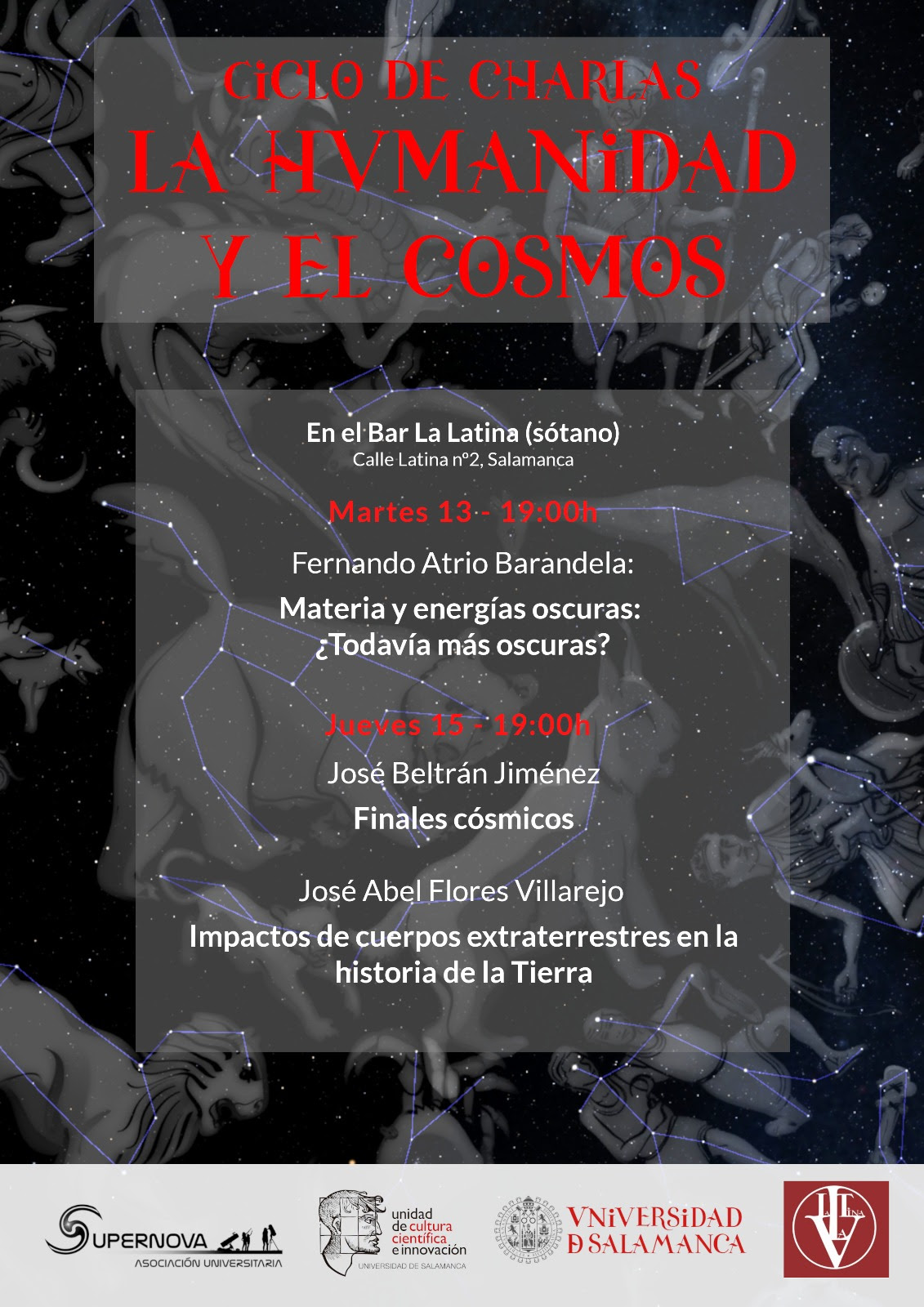
SupernovaMayo25La asociación Supernova está organizando unas charlas informales de divulgación sobre astrofísica, destinadas principalmente a estudiantes de física que tendrán lugar esta semana, y llevan por título “La humanidad y el cosmos”

Tendrán lugar en el Bar La Latina (sótano)

C/ Latina, nº 2, Salamanca

  • Martes 13. 19:00h
    • Fernando Atrio Barandela – Catedrático del Área de Física Teórica de la  Universidad de Salamanca
      • Materia y energías oscuras: ¿Todavía más oscuras?


  • Jueves 15 19:00 h
    • José Beltrán Jiménez - Profesor Titular del Área de Física Teórica de la  Universidad de Salamanca
      • Finales cósmicos
    • José Abel Flores Villarejo - Catedrático del Área de Paleontología de la Universidad de Salamanca
      • Impactos de cuerpos extraterrestres en la historia de la Tierra


Comentarios { 0 }

Domingo de Soto y la ley de caída de los graves: De su formulación en 1545 a la reformulación por Galileo Galilei en torno a 1604

Fecha: Jueves 15 de mayo
Tiempo: 13:00 h
Lugar: Aula I  - Edificio Trilingüe – Facultad de Ciencias Universidad de Salamanca
José Ángel Domínguez Pérez
Departamento de Matemáticas, Universidad de Salamanca
Título: Domingo de Soto y la ley de caída de los graves: De su formulación en 1545 a la reformulación por Galileo Galilei en torno a 1604
Abstract: Domingo de Soto (1494-1560), dominico del convento de San Esteban y catedrático de teología de la Universidad de Salamanca, escribió en 1545 la obra “Super octo libros physicorum Aristotelis. Comentaria / Quaestiones”, en la que asocia la caída de los graves (cuerpos que tienen peso) con el movimiento “uniformiter disformis” (uniformemente acelerado), indicando que la distancia recorrida por la tumba en caída libre puede ser calculada a partir del tiempo transcurrido, mediante el “teorema del Merton College” (1335), conocido también como teorema de la velocidad media o teorema fundamental de la cinemática.

Es un enigma cómo pudo llegar Domingo de Soto a esta conclusión, al igual que lo es cómo pudo llegar su conocimiento hasta Galileo Galilei (1564-1642), a quien se identifica como autor de la misma ley, enunciada en torno a 1604, casi sesenta años después que Soto.

A este enigma nos enfrentaremos en este Coloquio del IUFFyM, siguiendo la referencia del trabajo de Juan José Pérez Camacho e Ignacio Sols Lucía (1994), “Domingo de Soto, en el origen de la ciencia moderna” (Revista de Filosofía, 3ª época, vol. VII, núm. 12, pág. 27-49. Madrid. Editorial Complutense).

 
Comentarios { 0 }

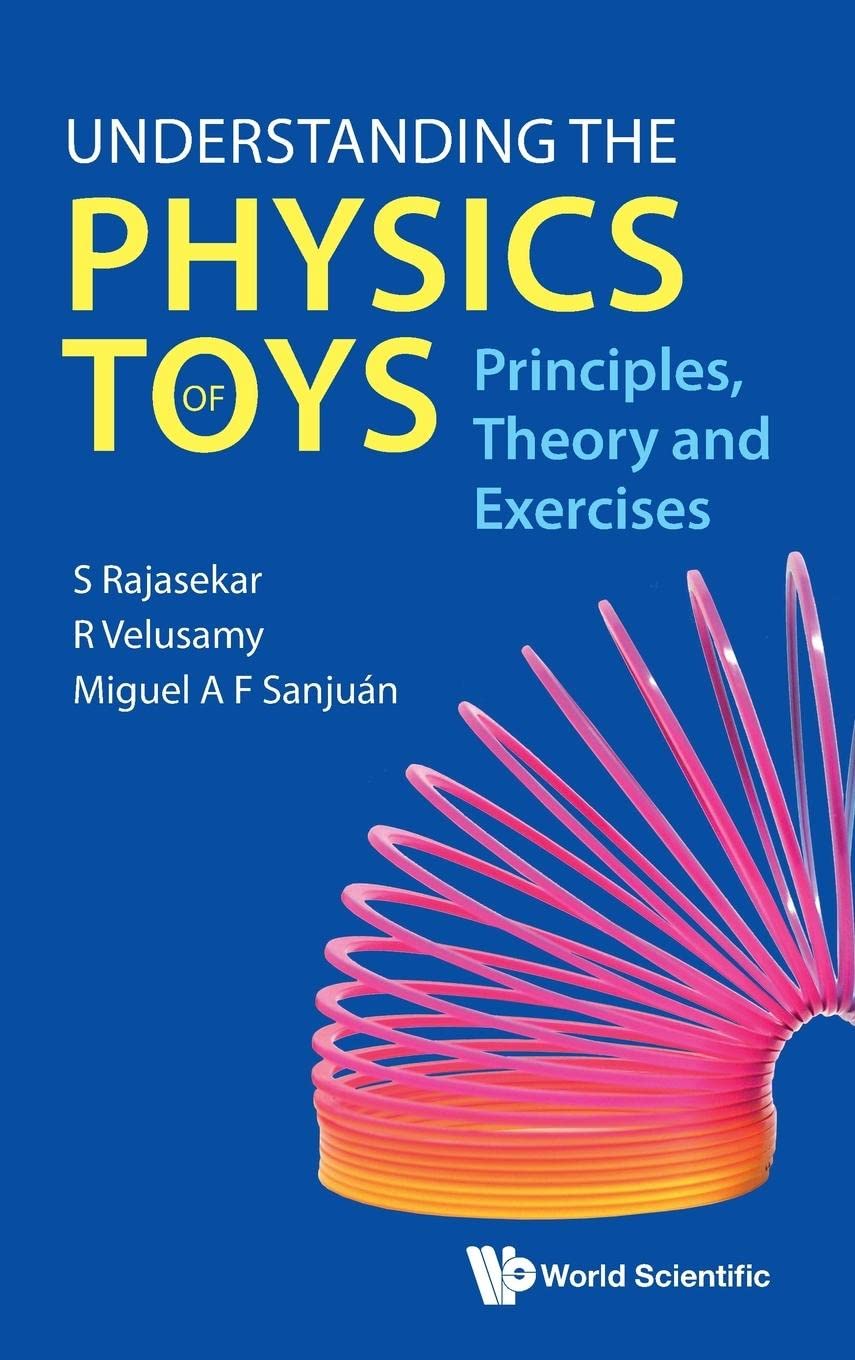
Understanding The Physics Of Toys: Principles, Theory And Exercises

61ekwpwpJJLRajasekar, S., Velusamy, R., & Sanjuán, M. A. (2023). Understanding The Physics Of Toys: Principles, Theory And Exercises. World Scientific.


Demonstrating many fundamental concepts of physics and engineering through the working principles of popular science toys is inexpensive, quickly reaching the senses and inspiring a better learning. The systematic way of setting theoretical model equations for the toys provides a remarkable experience in constructing model equations for physical and engineering systems. Given that most science toys are based on the principles of physics, and to cater to the needs of graduate and master-level programme students in physics and engineering, the present book covers more than 40 wide ranging popular toys. For each toy various features are presented including history, construction, working principle, theoretical model, a solved problem and 5–10 exercises. A course on The Physics of Toys can be designed based on the proposed book to be taught as a full course at graduate and master-level and even to students who have never been exposed to physics. Further, the features of the toys covered in this book can be used to illustrate various concepts and principles in different branches of physics and engineering.

Comentarios { 0 }

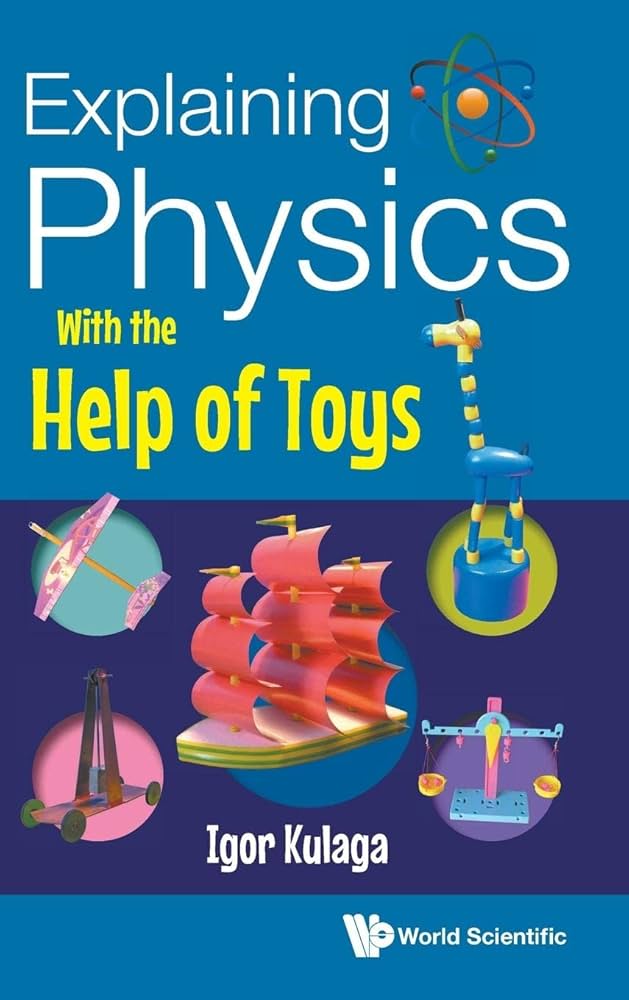
Explaining Physics With The Help Of Toys

  • LibroExplainingExplaining Physics with the Help of Toys. World Scientific.


The main task of the initial period of studying physics is inculcating the interest and enthusiasm of children in this subject. The root cause of all interest is surprise, and for children there is almost nothing more surprising than a new and unusual toy. There is a whole class of toys with unusual mechanisms, behaviour, or way of interacting with them. Having explained to the child the not quite ordinary, and often paradoxical, properties of such toys, we can gradually instil in him an interest in physics as one of the most important sciences about the nature of the surrounding world. The main purpose of the book is to arouse interest in the study of physics with the help of toys that everyone has loved since childhood. The book contains descriptions of the toys in which, with the help of explanations of the devices and principles of operation, the basic physical laws are revealed, together with perspectives of phenomena and patterns, practical significance, as well as historical information. The individual descriptions contain the minimum necessary mathematical calculations as well as information of environmental, statistical, and household orientations. All toys are systematized according to 4 chapters: Mechanics, Liquids and Gases, Electricity, and Optics. To a large extent, self-production of simple scientific toys can increase interest and enthusiasm in the process of teaching physics. To this end, the fifth chapter provides step-by-step instructions for making 14 such homemade toys from the most affordable materials using the simplest tools. The participation of teachers or parents in the process of making these toys by young children will undoubtedly provide positive emotions and establish trusting relationships.

Comentarios { 0 }

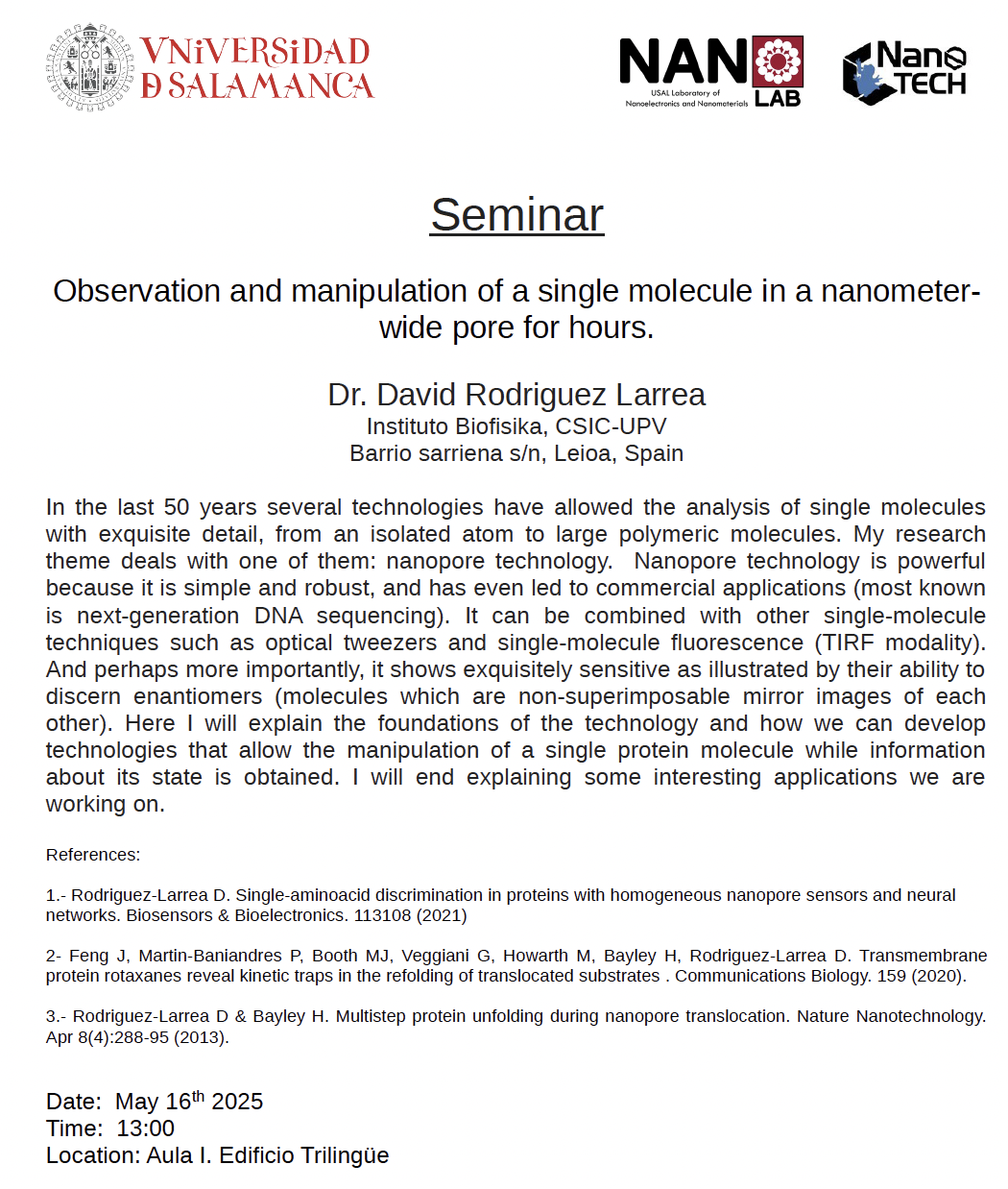
Observation and manipulation of a single molecule in a nanometerwide pore for hours

NanoLabNanoTec

Seminar

Observation and manipulation of a single molecule in a nanometerwide pore for hours

Dr. David Rodriguez Larrea

Instituto Biofisika, CSIC-UPV

Date: May 16th 2025

Time: 13:00 h

Location: Aula I. Edificio Trilingüe, Facultad de Ciencias, Universidad de Salamanca

Asbtract

In the last 50 years several technologies have allowed the analysis of single molecules with exquisite detail, from an isolated atom to large polymeric molecules. My research theme deals with one of them: nanopore technology. Nanopore technology is powerful because it is simple and robust, and has even led to commercial applications (most known is next-generation DNA sequencing). It can be combined with other single-molecule techniques such as optical tweezers and single-molecule fluorescence (TIRF modality). And perhaps more importantly, it shows exquisitely sensitive as illustrated by their ability to discern enantiomers (molecules which are non-superimposable mirror images of each other). Here I will explain the foundations of the technology and how we can develop technologies that allow the manipulation of a single protein molecule while information about its state is obtained. I will end explaining some interesting applications we are working on.


References:

1.- Rodriguez-Larrea D. Single-aminoacid discrimination in proteins with homogeneous nanopore sensors and neural networks. Biosensors & Bioelectronics. 113108 (2021)

2- Feng J, Martin-Baniandres P, Booth MJ, Veggiani G, Howarth M, Bayley H, Rodriguez-Larrea D. Transmembrane protein rotaxanes reveal kinetic traps in the refolding of translocated substrates . Communications Biology. 159 (2020).

3.- Rodriguez-Larrea D & Bayley H. Multistep protein unfolding during nanopore translocation. Nature Nanotechnology. Apr 8(4):288-95 (2013).


Comentarios { 0 }

22nd Multidark Workshop USAL

MultidarkMeeting2522nd Multidark Workshop dedicado a los últimos avances teóricos/experimentales en líneas de investigación de materia oscura que se celebrará en la Facultad de Ciencias de la Universidad de Salamanca durante los días 21 al 23 de mayo de 2025.
La web de la reunión puede encontrarse en: https://multidark2025.usal.es  
Comentarios { 0 }

Fotónica: La luz que impulsa la Ciencia y la Tecnología

ACDIL2025_A4Acto central del Día Internacional de la Luz, el viernes 16 de mayo a las 19:30h en el Teatro Unicaja de Salamanca, tendrá lugar la conferencia

Fotónica: La luz que impulsa la Ciencia y la Tecnología,

a cargo del profesor D. Ramón Villaseca (UPC)


Donde habita la luz

Espectáculo de Danza y Ciencia

Escuela de Danza Entregasas

Coreógrafa Luca Vete

Comentarios { 0 }

Día Internacional de la Luz Salamanca 2025

DiaInternacionalLuz2025Cada 16 de Mayo se celebra el Día Internacional de la Luz, en conmemoración de que Maiman mostró el funcionamiento del primer láser el 16 de mayo de 1960.
En el marco de ese día se celebra lo que se denomina el acto central, en un lugar de España que va rotando. Este año el acto central se celebrará en Salamanca,
Se adjunta información sobre las actividades organizadas por el CLPU con la colaboración de la Universidad, con múltiples actividades en mayo muy interesantes.
¡No te las pierdas!
Programa completo en: https://www.clpu.es/dil2025/
Comentarios { 0 }

V Jornada de Patrimonio Científico USAL

VpatrimonioCientificoUSALV Jornada de Patrimonio Científico  se celebrará el próximo 8 de mayo de 2025 con un programa muy interesante que se puede ver en la imagen.

Lugar: Instituto Universitario de Ciencias de la Educación

Retransmisión en directo: canal Youtube @SUMAS-SOCIALES

Destacar la intervención de la profesora

María Jesús Martínez Catedrática de la Universidad de Salamanca

que presenta La colección de antiguos instrumentos docentes y científicos de los laboratorios de física

Puedes consulta más información en:https://causal.usal.es/v-jornada-de-patrimonio-cientifico-de-la-universidad-de-salamanca-8-mayo-2025/

Organizan:

GIR Cultura Académica, Patrimonio y Memoria Social

Red de Colecciones Científicas de la Universidad de Salamanca

ProgVpatrimonioCientifico


Comentarios { 0 }
Política de privacidad
Studii Salmantini. Campus de excelencia internacional