

Sistema de blogs Diarium
Universidad de Salamanca
María Jesús Santos Sánchez
Facultad de Ciencias - Departamento Física Aplicada
 
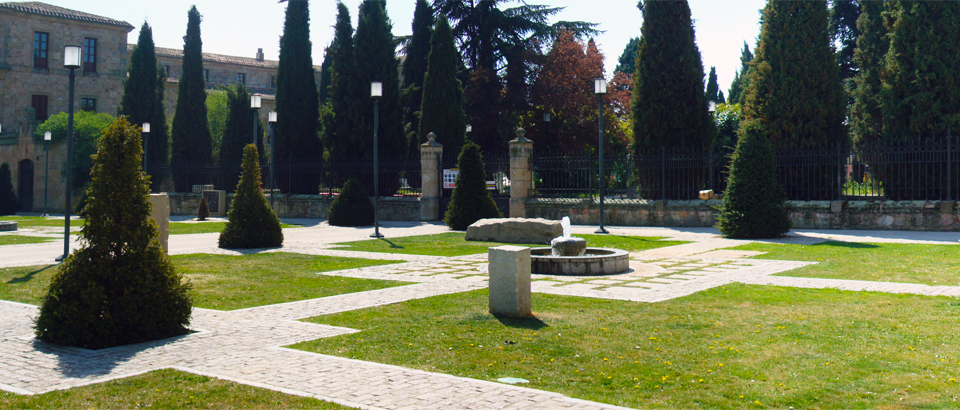
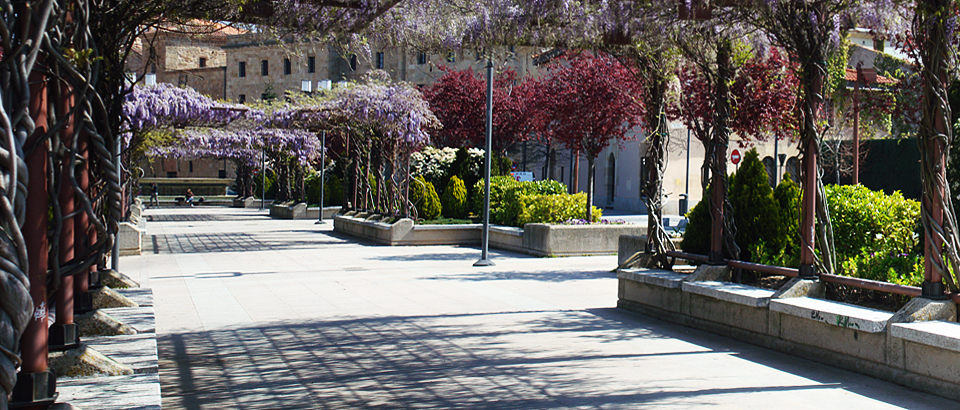
Jardines
Archivo | English Semillas RSS para esta sección

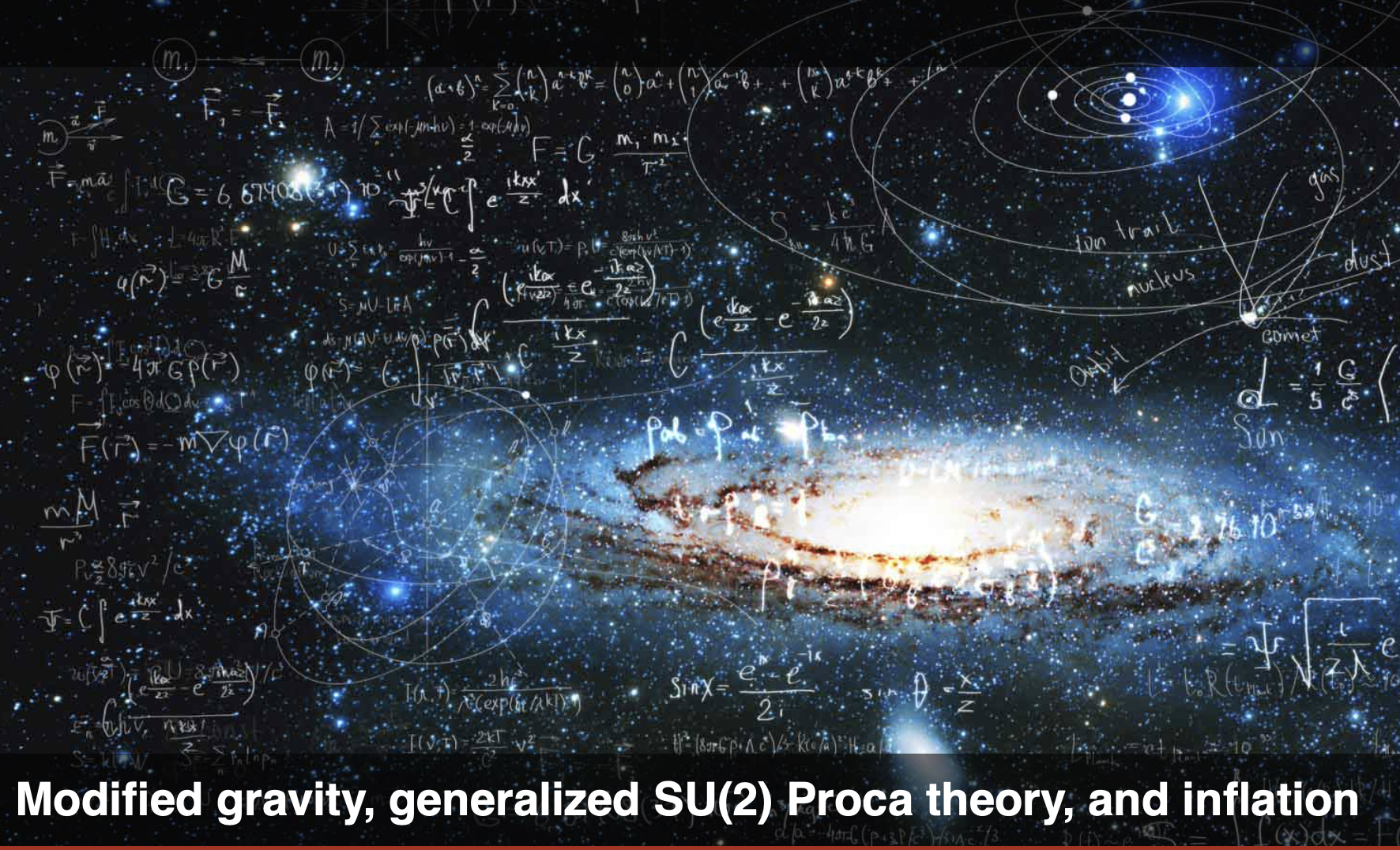
Modified gravity, generalized SU(2) Proca theory, and inflation – Yeinzon Rodríguez García

Title seminar: Modified gravity, generalized SU(2) Proca theory, and inflationYeinzonSeminarIUFFyM
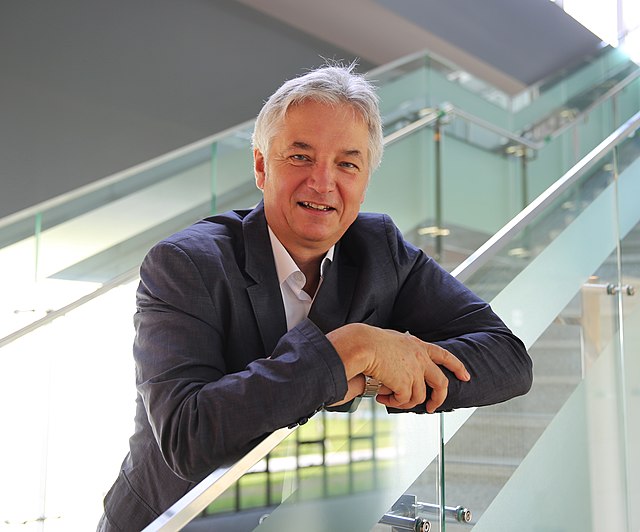
Speaker: Yeinzon Rodríguez García

Date and time:  Tuesday, July 16th, (12:00)
Room: Aula V (Edifício Trilingüe) – Facultad de Ciencias – Universidad de Salamanca
Universidad Industrial de Santander, Universidad Antonio Nariño.Abstract: This talk will be divided into three pieces. In the first part of the talk, I will introduce the common ideas surrounding the modified gravity proposals starting from their main motivation: Einstein gravity, despite all its success on the observational side, is an effective theory. In the second part of the talk, I will present the generalized SU(2) Proca theory (GSU2P for short). As a modified gravity theory that introduces new gravitational degrees of freedom, the GSU2P is the non-Abelian version of the well known generalized Proca theory where the action is invariant under global transformations of the SU(2) group. This theory was formulated for the first time in Phys. Rev. D 94 (2016) 084041, having implemented the required primary constraint to make the Lagrangian degenerate and remove one degree of freedom from the vector field in accordance with the irreducible representations of the Poincaré group. It was later shown in Phys. Rev. D 101 (2020) 045009 that a secondary constraint, which trivializes for the generalized Proca theory but not for the SU(2) version, was needed to close the constraint algebra. The implementation of this secondary constraint in the GSU2P was performed in Phys. Rev. D 102 (2020) 104066 where, as a side effect, the construction of the theory was made more transparent. Since several terms in the Lagrangian were dismissed in Phys. Rev. D 94 (2016) 084041 via their equivalence to other terms through total derivatives, not all of the latter satisfying the secondary constraint, the work was not so simple as directly applying the secondary constraint to the resultant Lagrangian pieces of the old theory. Thus, my collaborators and I were motivated to reconstruct the theory from scratch. In the process, we found the beyond GSU2P. In the third part of the talk, I will show what the impact of the GSU2P is on the cosmic primordial inflation epoch and what its main challenges are.
Comentarios { 0 }

Flat Band Physics by Sergej Flach

Sergej_Flach_theoretical_physicist_2018 Esta semana tendremos un coloquio un tanto especial, que además será el último de este curso académico.
Este evento se enmarca en el contexto del “International Workshop on Disordered Systems 2024”, congreso organizando en Salamanca por miembros del IUFFyM y que cuenta con el apoyo económico del Instituto.
La charla tendrá lugar el jueves 20 a las 16:50 horas en la Capilla del Colegio Arzobispo Fonseca.
De 16:10 a 16.50 se servirá un coffee break en el claustro inferior del Colegio Fonseca, al que están invitados los miembros del IUFFyM.
El speaker del coloquio será Sergej Flach, que es actualmente director del IBS Center for Theoretical Physics of Complex Systems, South Korea, y líder del grupo on Complex Condensed Matter Systems en dicho instituto.
Os dejo los detalles más abajo, y adjunto además el anuncio del coloquio.
La dirección del IUFFyM agradece a los organizadores del congreso hacer partícipe al instituto de este coloquio. Os esperamos a todos allí.
———————————————————————————————————————————————
Flat Band Physics
Sergej Flach
IBS Center for Theoretical Physics of Complex Systems, South Korea
Certain lattice wave systems in translationally invariant settings have one or more spectral bands that are strictly flat (independent of momenta) in the tight binding approximation, arising from either internal symmetries or fine-tuned coupling. We will briefly touch on the theoretical design and experimental implementation of flat bands and classification schemes. We will then discuss the impact of disorder and interactions. We will observe quantum many body interacting systems embedded in flat band environments which lead to controlled currents of charge and heat, heat percolation, many body localization in translationally invariant systems, and interaction induced transport in Wannier-Stark flatbands.
———————————————————————————————————————————————
Comentarios { 0 }

Why do galaxy sizes matter? by Fernando Buitrago

Speaker: Fernando Buitrago (Universidad de Valladolid)Title: Why do galaxy sizes matter?

Abstract: During the last decades, galaxy sizes have been a very active research topic in Astrophysics given the fact that they are one of the few direct observables from objects in the distant Universe. In this seminar, I will review the different approaches that were traditionally taken, showing what we have learned about how our Universe works over time. However, galaxies are fuzzy objects, and as such it is very hard to assign sizes to them. One would naively think that by observing for larger integration times and/or by using better telescopes these objects will grow bigger and bigger. I will prove you wrong by describing a novel physically-motivated size proxy (the galaxy edges or galaxy truncations) that my team GEELSBE (Galactic Edges and Euclid in the Low Surface Brightness Era) at the University of Valladolid is studying. We have utilized the deepest pointings of the Hubble Space Telescope (while now using the James Webb Space Telescope and Machine Learning algorithms) to obtain the evolution of this parameter last 8 Gyr promising to give us first hand information not only about the baryonic mass assembly but also the dark matter halo evolution.

Date and time:  Wednesday, June 05, (13:00)gracus_logo2

Room: Aula V, Edificio Trilingüe, Facultad de Ciencias, Universidad de Salamanca

https://gracus.usal.es/seminar.php?id=84

Comentarios { 0 }

Validation of a 3D Local-Scale Adaptive solar Radiation Model

“Validation of a 3D Local-Scale Adaptive Solar Radiation Model by Using Pyranometer Measurements and a High-Resolution Digital Elevation Model”
Rodríguez, E., García-Ferrero, J., Sánchez-Aparicio, M., Iglesias, J. M., Oliver-Serra, A., Santos, M. J., Andrés-Anaya, P., Cascón, J.M., Montero García, G., Medina, A., Lagüela S., Asensio, M.I., & Montenegro Armas, R.
Sensors,  2024, 24(6), 182
https://www.mdpi.com/1424-8220/24/6/1823


Orgullosos de este trabajo de colaboración entre investigadores de diferentes áreas de conocimiento,  departamentos  y universidades:

  • Instituto Universitario de Sistemas Inteligentes y Aplicaciones Numéricas en Ingeniería (SIANI), Universidad de Las Palmas de Gran Canaria, 35017 Las Palmas de Gran Canaria, Spain
  • Instituto Universitario de Física Fundamental y Matematicas (IUFFyM), Universidad de Salamanca, 37008 Salamanca, Spain
  • Departamento de Física Aplicada, Universidad de Salamanca, 37008 Salamanca, Spain
  • Departamento de Ingeniería Cartográfica y del Terreno, Universidad de Salamanca, 37008 Salamanca, Spain
  • Departamento de Matemática Aplicada, Universidad de Salamanca, 37008 Salamanca, Spain
  • Departamento de Economía e Historia Económica, Universidad de Salamanca, 37007 Salamanca, Spain.

Todo un lujo.

Sensors3D

Comentarios { 0 }

Award for Secondary School Teaching


The European Physical Society (EPS), acting through its Physics
Education Division (PED) *grants the **Award for Secondary School
Teaching *subject to the following criteria:* The award should be made to an individual high school teacher. (It
is not a team award.)
* The award should recognize work that directly affects students of
   physics in one or more European secondary schools. (Secondary school
may be broadly interpreted, but specifically excludes primary
schools and universities.)
* The award should recognize a specific contribution to teaching,
particularly one that might be taken up in a range of countries. (It
is not a lifetime achievement award, nor is it an award for research
into teaching, though teaching may be broadly interpreted and should
   include activities that encourage students to take up the study of
   physics or improve access to the study of physics.)
* _Particular consideration will be given in 2021 for work in remote
or on-line teaching in physics._The award consists of a certificate and the amount of  1,000 (one
thousand euros)._It is intended that the award will be presented during the GIREP
Seminar on Teacher Education and Development, which is currently
scheduled to take place in November 2021 at the University of Malta,
travel restrictions permitting_. _The award winner is normally provided
with additional funding to allow his or her attendance._

The award committee consist of four ordinary members and a chair, all
nominated by the EPS Physics Education Division.

A single nomination is invited from each National Physical Society
belonging to the EPS in the year of the award.

The nomination should be no longer than 500 words and should be in English.

The Societies should be particularly encouraged to nominate individuals
who have already won a national prize or award. The Societies should
also be encouraged to consult national associations of physics/science
teachers regarding suitable candidates.

The closing date for nominations is on 28th May 2021.

Thank you.

Best regards,

David Lee, EPS Secretary General,
David Sands, EPS PED chairperson.

Comentarios { 0 }

Grants for 2019 Summer Research Programme ASTRON & VLBI ERIC (JIVE)

The Netherlands Institute for Radio Astronomy (ASTRON) and the Joint
Institute for VLBI ERIC (JIVE) announce the availability of a limited
number of grants for their 2019 Summer Research Programme. The
Programme enables astronomy students (graduate or advanced
under-graduate) to spend the summer (10-12 weeks) at the institute in
Dwingeloo in the Netherlands, conducting astronomical research under
the supervision of ASTRON and JIVE staff members.

Possible topics of study include radio galaxies and quasars, aspects
of observational cosmology, continuum and line mission/ absorption
from normal and starbust galaxies, faint radio sources, pulsar timing,
pulsar searching, fast radio bursts, molecular clouds, cosmic
magnetism, as well as algorithm development. The actual project the
successful candidate will work on will be defined after arrangement
with the local supervisor. The programme is not aimed at engineering
or electronics students.

More information can be found at:
http://www.astron.nl/astronomy-group/astronjive-summer-student-programme

Applications for the programme should be sent via the registration
form at this website. Deadline for applications is 1 February 2019.

Job ad can also be found at AAS Job register:
https://jobregister.aas.org/ad/8b008aad

Comentarios { 0 }

Masterclass Science on Stage

Here you can find a file with the presentation of the masterclass.

Presentation masterclass

Comentarios { 0 }

Video “Listening to gravity”

Flickr Video
Comentarios { 0 }

Data from the experiences

Single sheet for making experimental data discussed in previous entries.

Data from the experiences

Comentarios { 0 }

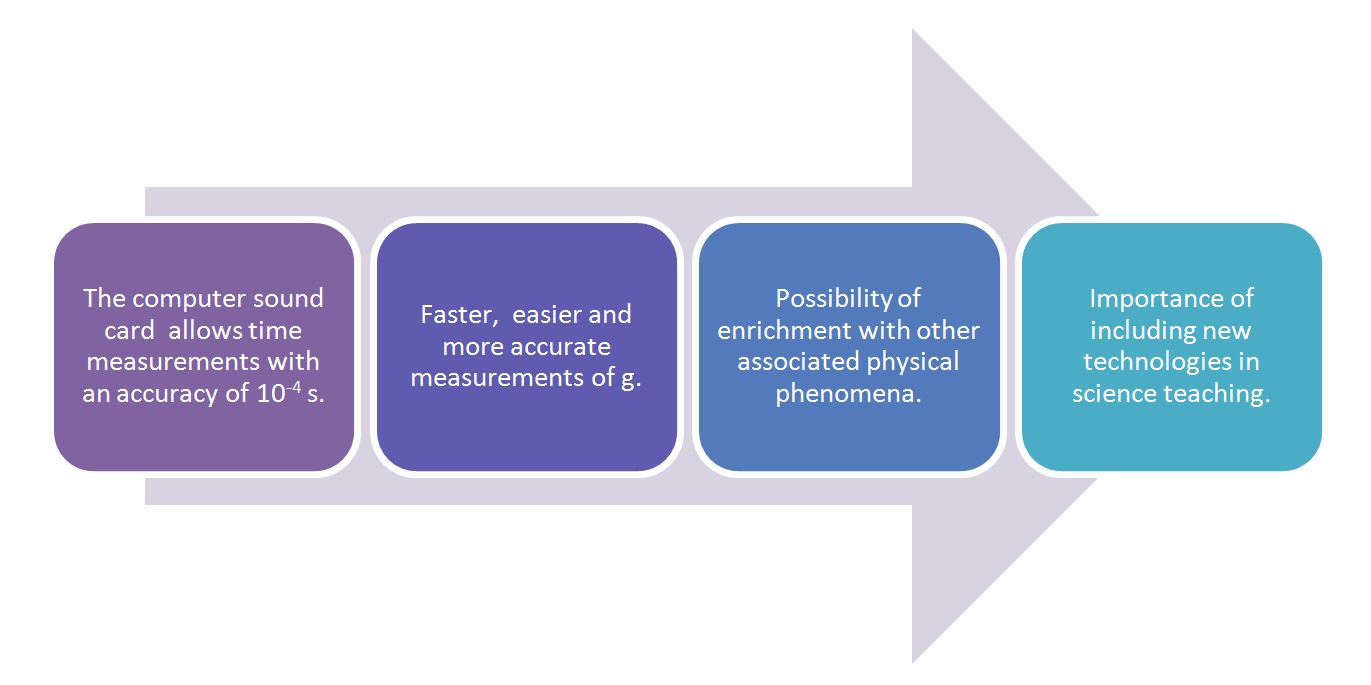
Advantages of the experiences

Advantajes of the experiences

Special qualities that make this presentation spectacular:

  • The simplicity and accessibility to reproduce these experiences.
  • Very high accurate measurements of time (of the order of 10-4 s).
  • It provides an alternative procedure to the software that is presented by the commercial laboratories for the same purpose.
  • Faster measurements than using standard methods.
  • Possibility of enrichment with other associated physical phenomena to each experience.
  • Importance of including new technologies in the education of sciences.
  • The major advantages are the very low cost of the proposed experiments and they are easy to understand for students due to their familiarity with the software when it is used ‘properly’ for editing musical tracks.
Comentarios { 0 }
Política de privacidad
Studii Salmantini. Campus de excelencia internacional