




I am a member of the Grupo de Investigación Reconocido (USAL) named NUCLEAR ASTROPHYSICS. I am also a member of the UIC excellence group in Junta Castilla y León .
Generically I belong to the theoretical physics group at the the Fundamental Physics Department and Instituto Universitario de Física Fundamental y Matemáticas (IUFFyM). My funding resources include Junta de Castilla y León SA101P24 and Spanish Ministry of Science PID2022-137887NB-I00, Gravitational Wave Network (REDONGRA) Strategic Network RED2024-153735-E from Agencia Estatal de Investigación del Ministerio de Ciencia, Innovación y Universidades MICIU/AEI/10.13039/501100011033. European project Horizonte 2025 COFUND, Probing Dense Matter inside Neutron Stars with Gravitational Waves (DensMat-NS) PROOPI-815.

My present field of research is theoretical physics including lagrangian models to describe new physics in Beyond Standard Model , BSM, theories. I am mostly interested in extreme, relativistic, conditions of matter inside compact stars such as pulsars (neutron stars, NS) mergers of binary NS or Black hole-NS mergers. These events are source of multimessengers: neutrinos, radiation, gravitational waves and perhaps exotic BSM particles. Curved Spacetime describes the structure of these objects.
I belong to the REDONGRA network (on gravitational waves)
and dark matter MULTIDARK network 
focused on the multimessenger approach to constrain dark matter (DM) properties through accretion onto compact stars. For example, self-annihilation of DM-particles could drive effects in the inner core of neutron stars that may lead to a quark deconfinement phase transition. On a different approach, milli-charged DM may also be enhanced in pulsar magnetospheres.
In this same line, this central engine in the transition may be relevant for ultra-high energy cosmic rays, since newly formed lumps of quark matter particles have a peculiar Z/A (charge-to-mass ratio) being less easily deflected or stopped by the interstelar medium. In addition, large energies of about 1048-54 erg could be released in the neutron star to the (hybrid) quark star transition. Relativistic ejection of matter may lead to the gamma ray burst emission, detectable as a short burst by Fermi-LAT or Swift, for example.
I am a member of the present european e-COST Action network Cosmic Wispers on Axion physics. Previous networks include PHAROS and ESF networks COMPSTAR and newCompstar to study compact stars in a variety of ways ranging from computational simulations, observation and theoretical nuclear astrophysical models. In particular we are proud organizers of the international workshop, the II Iberian Nuclear Astrophysics meeting in September 2011 on these subjects. You can take a look at the proceedings published at http://iopscience.iop.org/1742-6596/342/1
I am also interested in neutrino physics, since it constitutes a clean signal of matter under extreme conditions and allows the determination of nuclear observables in compact objects as they cool or in binary mergers.
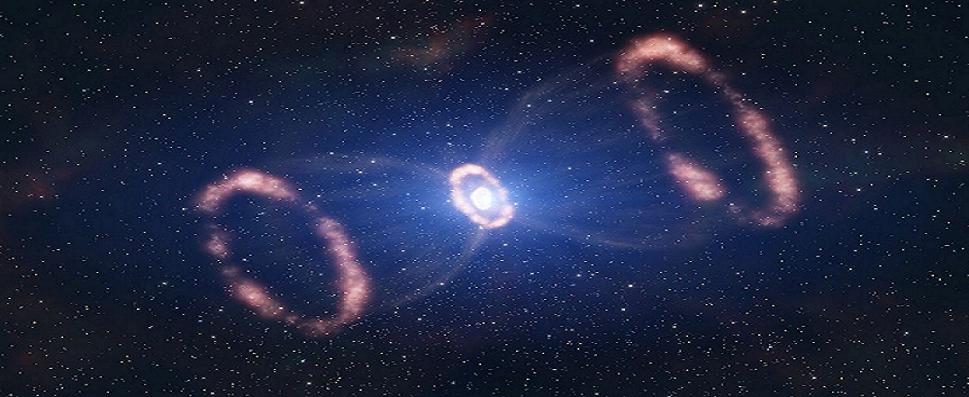
Another project that I am interested on is an analysis of the dynamical simulation of the crust of neutron stars and pasta phases. This type of matter can happen in the exterior shells of Neutron Stars formed in the aftermath of a Supernova core collapse event.
I have enjoyed working with extreme magnetic fields and the nuclear relativistic Fermi Liquids that may describe the liquid phases at very high densities. Magnetized nuclear matter and its main physical magnitudes may be described by the relativistic/nonrelativistic Landau Parameters.
In past years, much of my research has been associated with the theoretical descritption of behavior of nuclear matter and equations of state (EOS). I have worked on one-meson potentials including effects of finite temperature and density to size the in-medium contributions to the nucleon-nucleon interaction.
I belong to the Einstein Telescope Collaboration, a third-generation, gravitational-wave observatory. It builds on the success of current, second-generation laser-interferometric detectors Advanced Virgo and Advanced LIGO, whose breakthrough discoveries of merging black holes and neutron stars over the past 5 years have ushered scientists into the new era of gravitational-wave astronomy.
On more observational grounds we are part of the theory side on collaboration MAAT at GranTeCan, where Infrared-visible-UV radiation will be measured after the next Kilonova goes off (i.e. the radiation acompanying a BNS or NS-BH). This kind of cosmic siren will allow great advances from: equation of state to Hubble constant alternative determination. Check this nice video on YouTube for presentation.
Other research topics on which I am interested are:
- Astrophysical aspects of dark matter
- Very intense electromagnetic fields, non-linear field theories
- Exotic states in dense matter (nuclearites)
- Nucleon and Quark matter properties
- Extreme conditions in compact stars
In memoriam of JM Pérez, ML García, J.M. López, M. Macfarlane, B. D. Serot.
…Never forgotten, guiding us.